Autosomal Dominant Polycystic Kidney Disease Animation
The Process
Creating the Animation
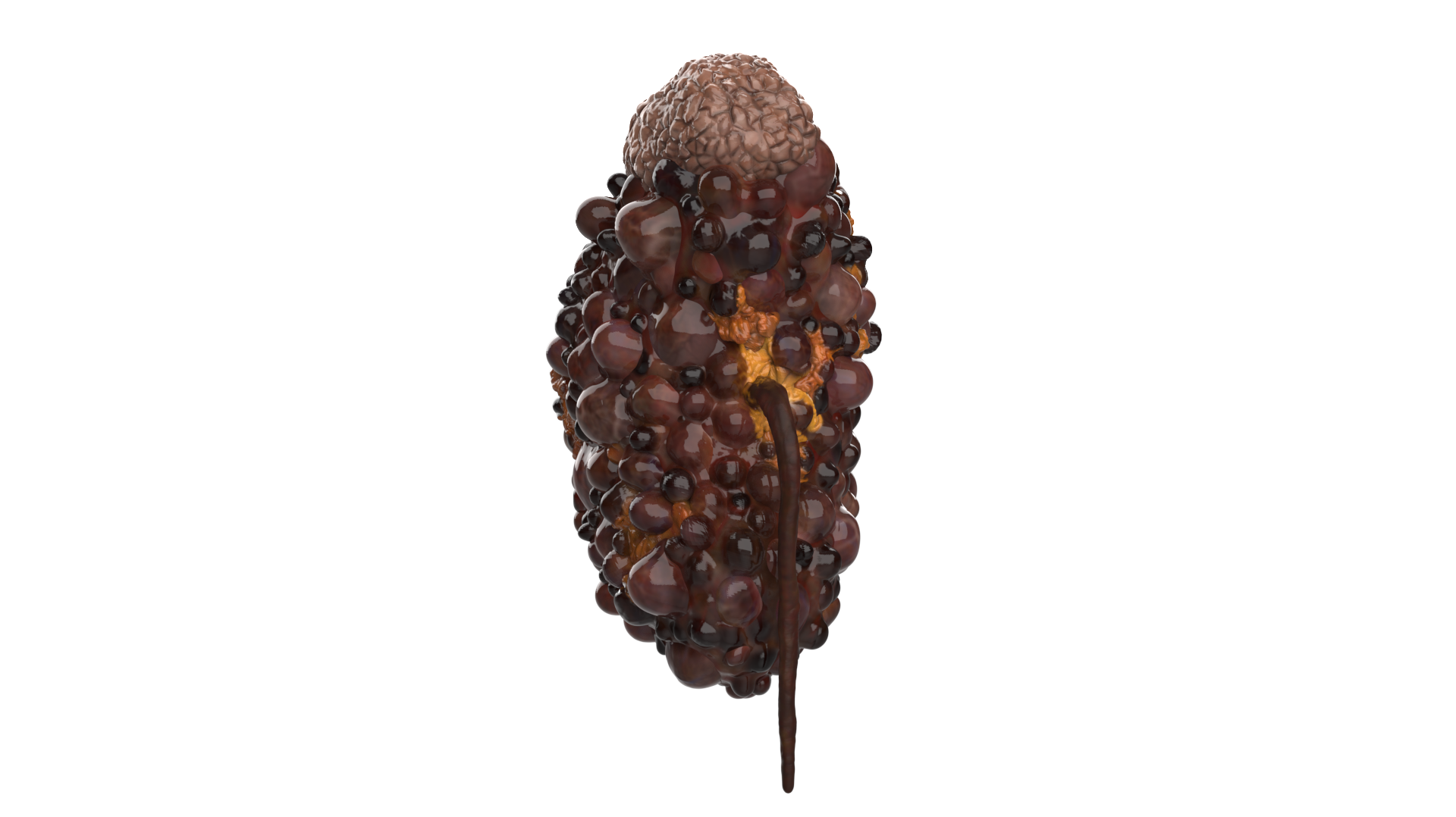
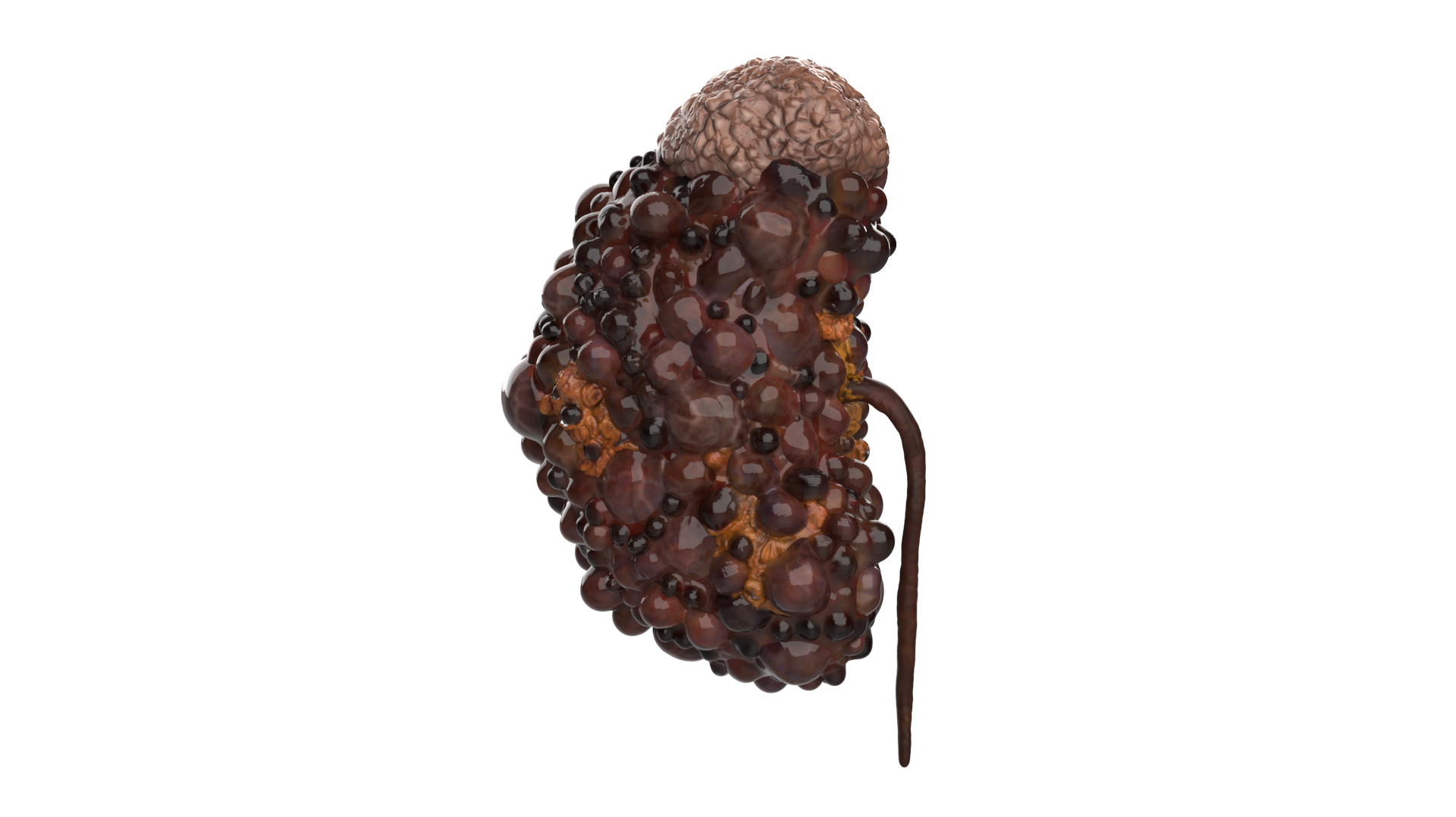
I created this 3D animation to clearly visualize the form and surface details of a kidney affected by autosomal dominant polycystic kidney disease. By combining 3D modeling, realistic materials, and motion, the animation presents the anatomy in a clear and engaging way.
Overview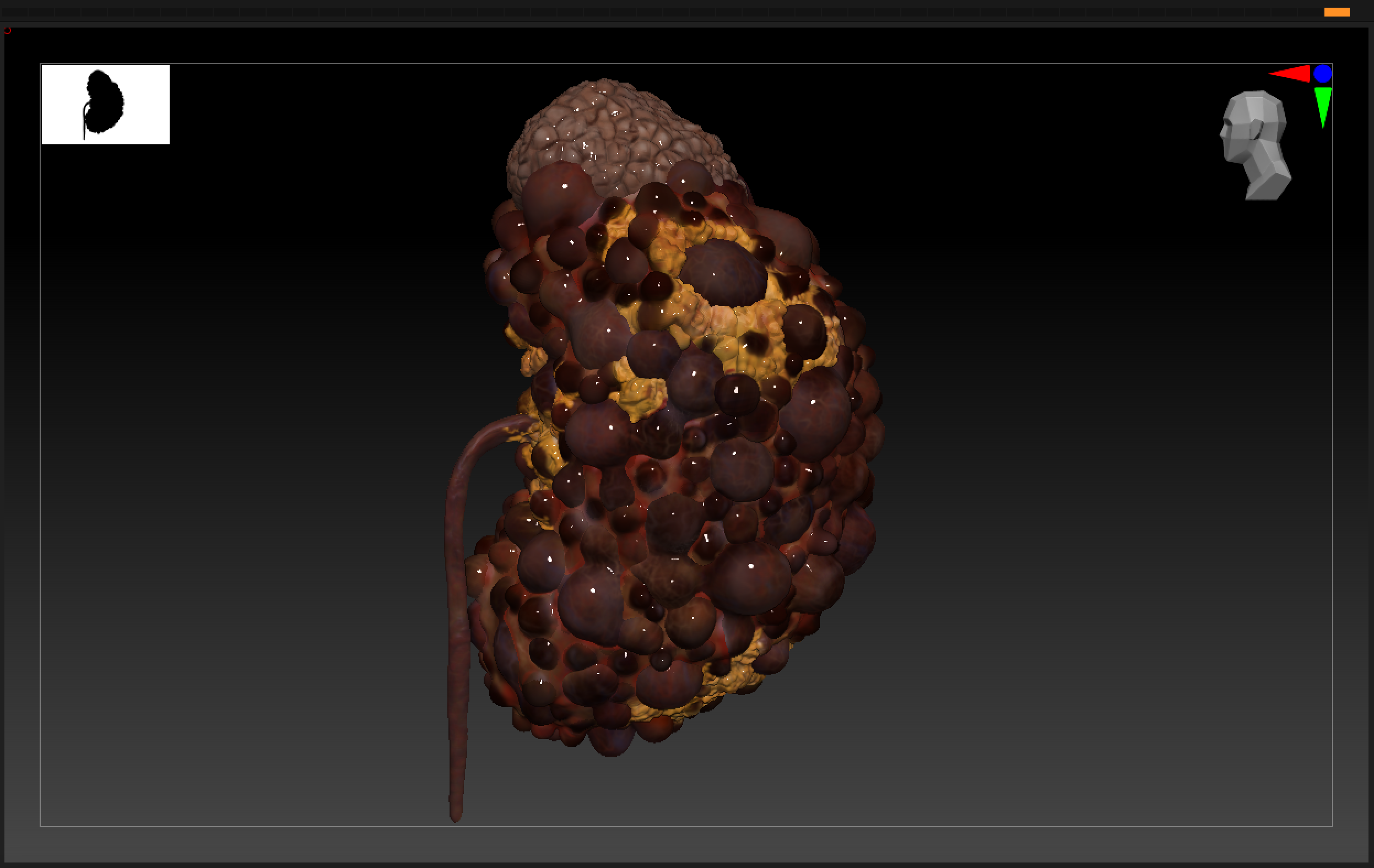
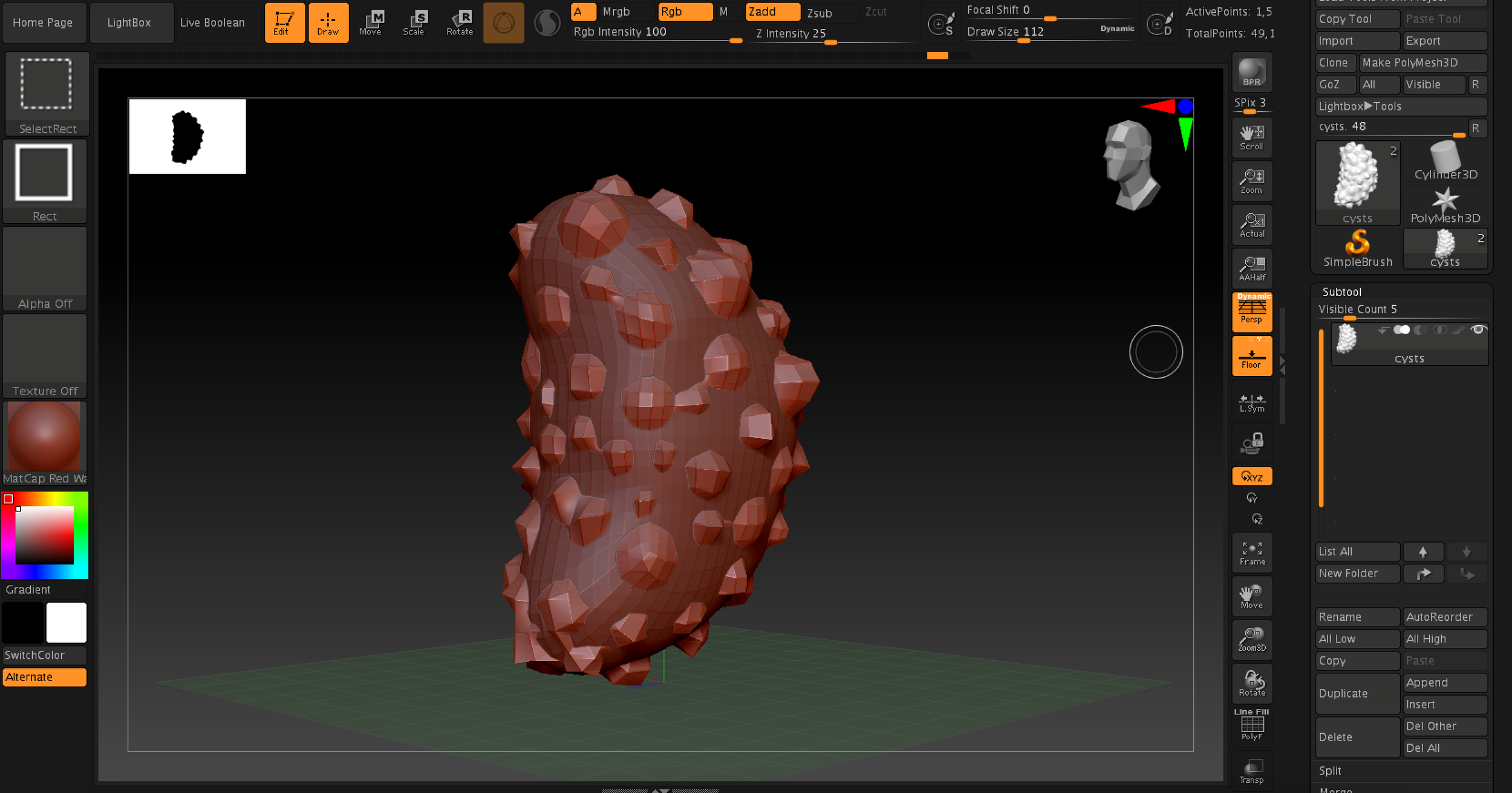
Building the 3D Model
I began by sculpting the kidney in ZBrush, carefully developing its overall form and the numerous cysts covering its surface. Once the model was complete, I painted the surface texture to introduce natural variation, depth, and anatomical detail.
Step 1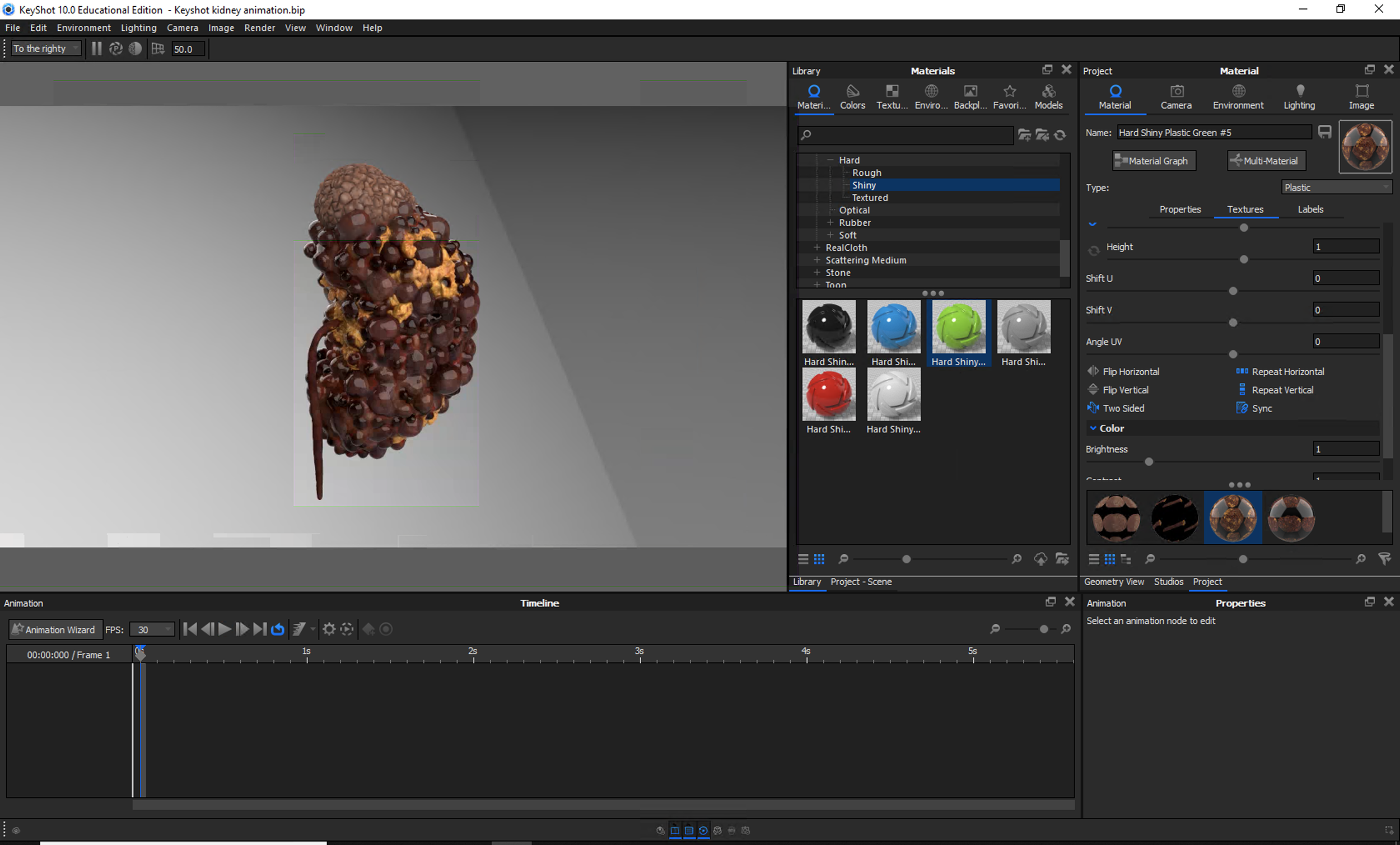
Lighting and Materials
The finished model was then brought into KeyShot, where I added the kidney’s material and adjusted the lighting. This stage helped define the model’s final appearance while ensuring that the shape, texture, and individual cysts remained easy to see.
Step 2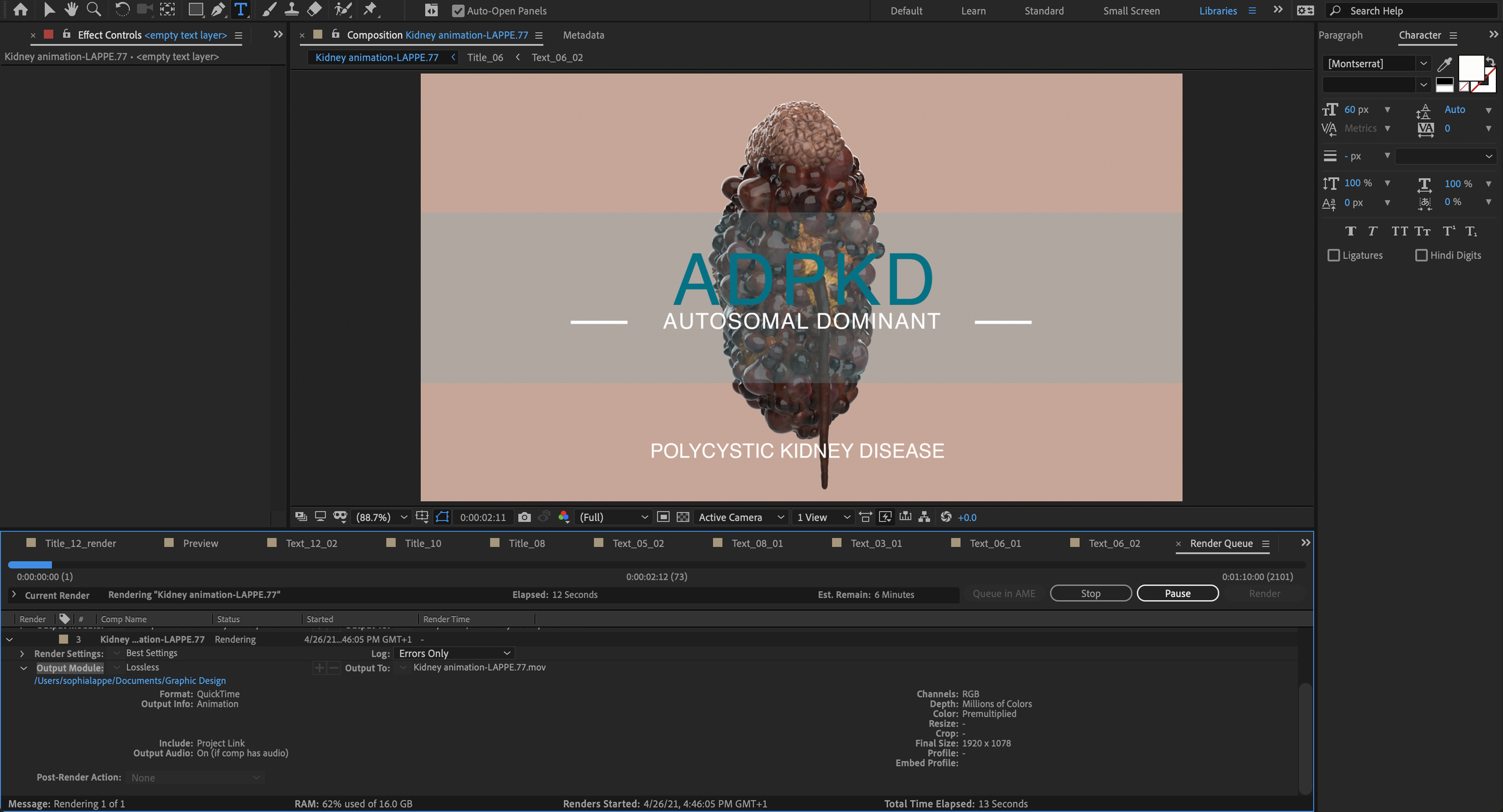
Animation and Post-Production
Finally, I brought the rendered files into Adobe After Effects to assemble and animate the sequence. I refined the timing and transitions before adding explanatory text and sound to create a polished educational animation.
Step 3
The Final Animation
The final animation brings together the 3D modeling, texturing, lighting, and motion developed throughout the project. It offers a clear, focused view of a polycystic kidney and helps viewers better understand how the condition changes the organ’s external structure.